

Last Updated on September 30, 2026
AI Transparency VerifiedDropshipping continues to attract new entrepreneurs in 2026, and choosing the best dropshipping tools is one of the most important early decisions you will make. You do not need inventory, warehouse space, or complex logistics. That said, the platforms you rely on directly affect shipping speed, product quality, customer satisfaction, and long-term scalability.

Here is something experience consistently shows: stores that begin with reliable tools avoid costly mistakes. Slow delivery, inconsistent suppliers, and poor automation often stall growth before momentum builds. Meanwhile, merchants using dependable infrastructure focus more on marketing, product positioning, and customer experience.
The right tools help you:
- Source trustworthy suppliers
- Deliver faster shipping
- Automate fulfillment
- Improve store credibility
- Scale operations smoothly
If you are just getting started, begin here first: 👉 How to Start an Online Store in 2026 & Make Your First Sale
In this guide, we explore the best dropshipping and ecommerce tools available today, including Shopify, Americommerce, Spocket, Doba, Printify, Printful, CustomCat, Sell The Trend, Eprolo, Zendrop, CJdropshipping, AliExpress, and Easyship, so you can choose what truly fits your goals.
Understanding how these platforms differ will save you months of trial and error.
Before choosing a platform, make sure you know what you are going to sell. Our guide to the best dropshipping products in 2026 covers eight proven niches with specific product examples.
How to Choose the Best Dropshipping Tools for Your Store
Beginners often select platforms based purely on product quantity. But success typically depends on deeper factors.
Shipping Speed
Modern customers expect faster delivery. So, domestic suppliers often improve satisfaction and retention.
Product Quality
Low-quality sourcing leads to refunds and reputation damage.
Automation
Manual order handling slows scaling.
Branding Support
Private labeling and packaging options enable brand identity.
Testing Flexibility
Low-cost entry supports product validation.
Evaluating platforms through this lens makes selecting the best dropshipping tools significantly easier.
1. Shopify — Where You’ll Actually Run Your Store
Before comparing suppliers or fulfillment apps, you need a place to put them. Shopify is the store engine most of the tools in this guide — Spocket, Printify, Zendrop, and the rest — plug directly into, which is why it’s worth starting here rather than treating it as one option among many.
Setting up a store takes under an hour, even with no coding background. From there, every sourcing or fulfillment app on this list becomes a one-click install rather than a technical project.
Real-World Example: Someone testing a niche idea can launch a bare-bones Shopify store today, connect Spocket or Printify tomorrow, and have their first product live by the weekend — no developer required.
Best for
- Anyone starting from zero
- Sellers who want the widest app/tool ecosystem
- Store owners planning to scale beyond one sourcing method
Strengths
- Huge app marketplace covering every tool in this guide
- Beginner-friendly setup and themes
- Strong documentation and support
Limitations
- Monthly subscription cost on top of any sourcing/fulfillment tools
- Transaction fees unless using Shopify Payments
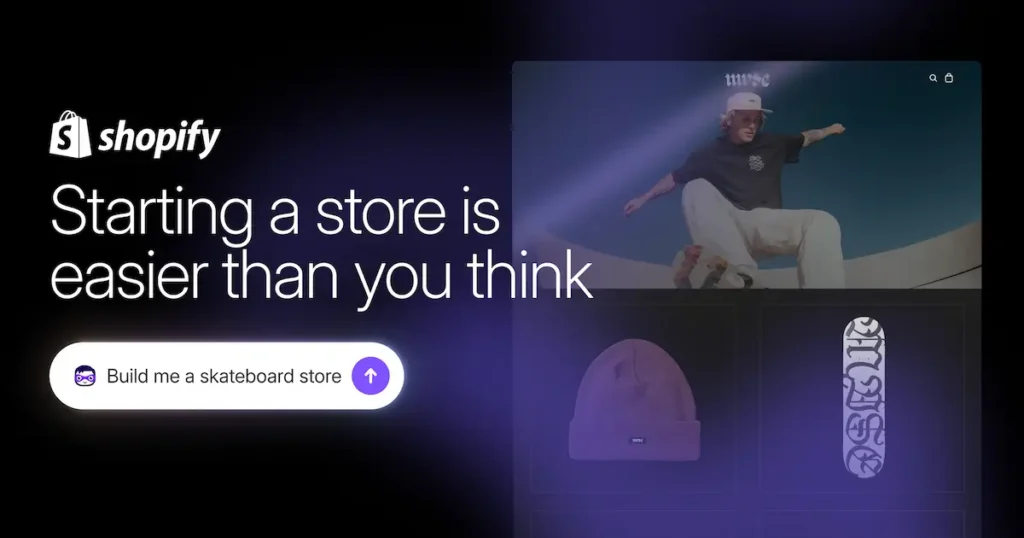
Free trial available — build your store before you pay
2. AmeriCommerce — Alternative for Complex, Multi-Store Needs
AmeriCommerce is built for sellers running several storefronts, complex B2B/wholesale pricing, or catalogs that need heavier customization than Shopify’s theme system allows. That’s a narrower audience than most readers of this guide.
Real-World Example: A dropshipper who’s outgrown a single store and wants to run separate B2C and wholesale storefronts from one dashboard might consider AmeriCommerce instead of running multiple Shopify accounts.
Best for
- Multi-storefront or B2B/wholesale operations
- Sellers with complex catalog or pricing rules
Strengths
- Native multi-store management from one dashboard
- Deep B2B feature set (tiered pricing, rules engines)
Limitations
- Real learning curve compared to Shopify
- Plan tiers cap products, bandwidth, and storage, with overage fees
- Overkill — and likely the wrong tool — for a first dropshipping store
Not ideal for: Beginners; most readers should start with Shopify instead
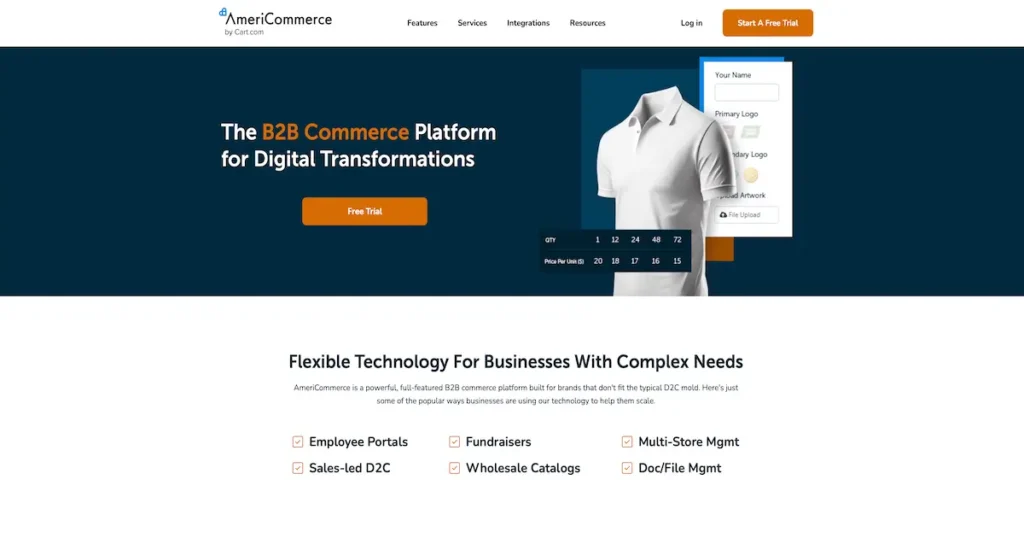
Built for multi-store and B2B sellers, not first-time store owners
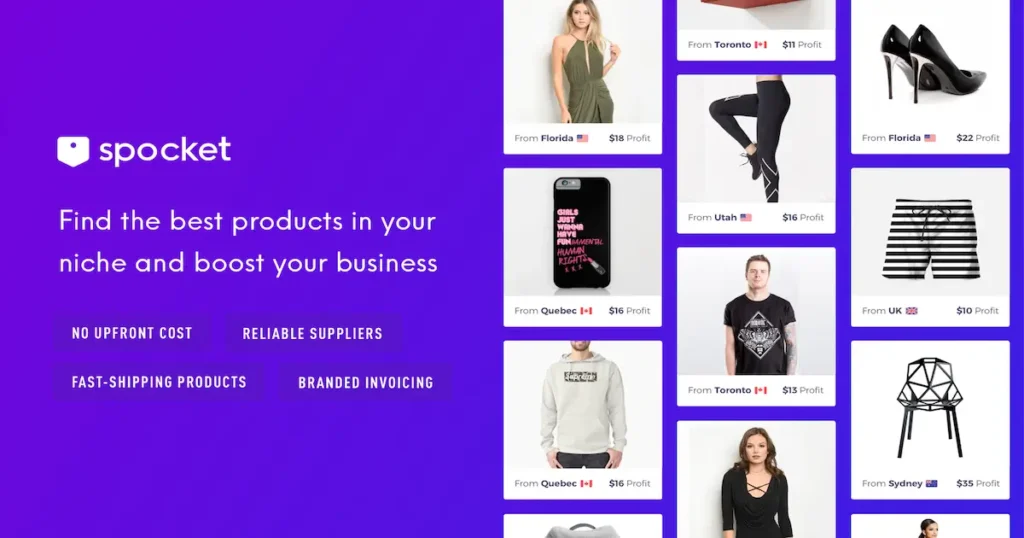
3. Spocket — One of the Best Dropshipping Tools for Fast US & EU Shipping
Spocket has become one of the best dropshipping tools for store owners prioritizing reliability and customer satisfaction. Instead of depending heavily on suppliers shipping from overseas, it connects merchants with suppliers based primarily in the United States and Europe. As a result, that regional sourcing dramatically shortens delivery times and often improves product consistency.
Shipping expectations have shifted in recent years. In fact, customers now compare delivery speeds to large marketplaces. As a result, long delays lead to refund requests, negative reviews, and lost trust. This is exactly where Spocket’s supplier network provides practical value.
The platform integrates directly with Shopify and WooCommerce, allowing automated order fulfillment and inventory syncing. Furthermore, product import is straightforward, and merchants can order samples before selling, which is an overlooked step that helps verify quality and packaging.
Real-World Example
A beginner launching a home décor store might start testing with budget suppliers. Once they identify their best-selling items, switching those products to Spocket suppliers often reduces delivery complaints and improves repeat purchases.
Best for
- Sellers targeting US or EU customers
- Stores prioritizing brand perception
- Businesses planning long-term scaling
Strengths
- Faster delivery windows
- Quality supplier vetting
- Sample ordering available
- Branded invoicing support
Limitations
- Smaller product selection compared to global marketplaces
- Premium plans unlock more features
Not ideal for
- Ultra-low-cost product experimentation
4. Doba — US-Heavy Supplier Directory
Doba centralizes supplier relationships the way Spocket does, but with a larger, more general-merchandise catalog and roughly 90% of listed suppliers shipping from US warehouses. In 2026 it’s also added AI tools for product research and listing, which shortens the setup process for beginners.
Real-World Example: A seller who wants Spocket-style fast US shipping but a bigger catalog to test across categories might start with Doba’s trial before locking into a niche.
Best for
- General merchandise sellers wanting domestic shipping speed
- Sellers who want one dashboard instead of many vendor relationships
Strengths
- Large US-warehouse supplier network
- Centralized inventory and price sync
- AI-assisted product research (Doba Pilot)
Limitations
- No free plan — plans run roughly $25–$300/month
- Product costs run higher than sourcing direct from manufacturers
- Not suited to high-ticket/specialty dropshipping niches
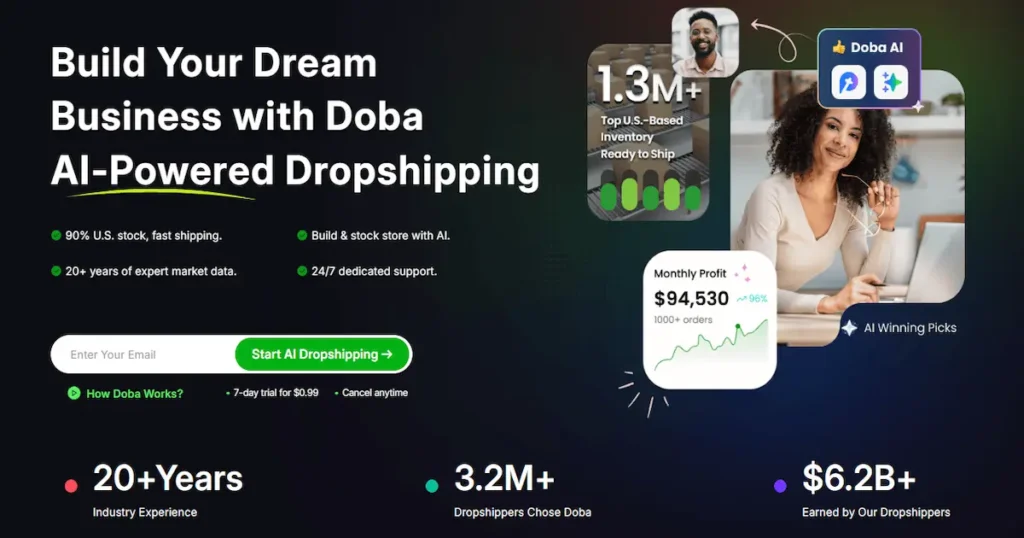
Trial available for $0.99 — test it against real products first
5. Printify — Flexible Print-on-Demand
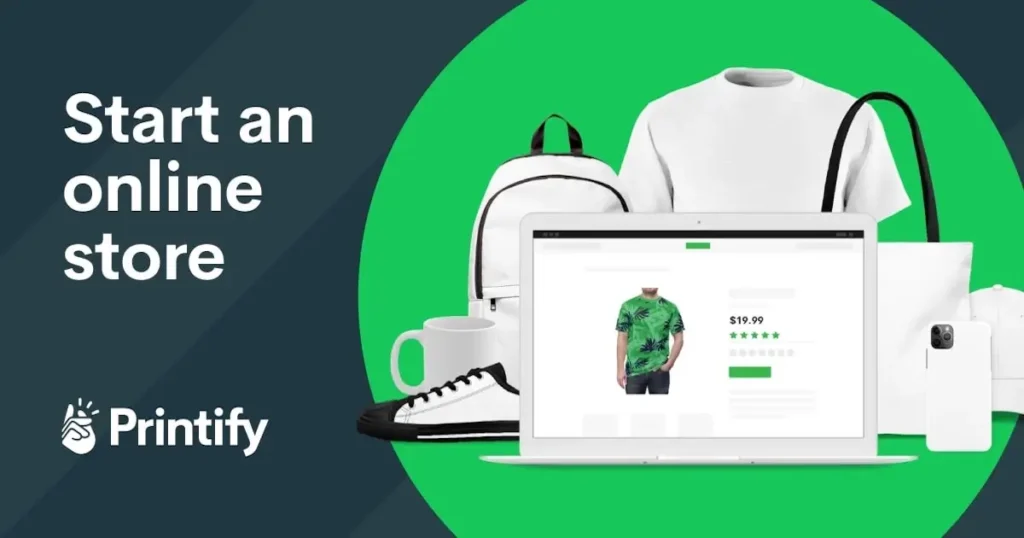
Printify remains one of the best dropshipping tools for creators launching branded products without upfront inventory. Specifically, it connects merchants with a network of global printing partners, allowing selection based on location, cost, or fulfillment speed.
That flexibility allows optimization as a store evolves over time. For instance, beginners may prioritize low cost, while established sellers may choose providers closer to their target customers.
In terms of product range, options include apparel, accessories, home décor, and stationery. Additionally, the built-in mockup generator simplifies product presentation for online listings..
Practical Strategy
Many entrepreneurs validate niche designs using Printify before investing in branding upgrades or migrating to higher-cost premium solutions.
Best for
- Creators launching merchandise
- Niche branding experiments
- Low-risk product testing
Strengths
- Large product catalog
- Provider selection flexibility
- Easy store integration
Limitations
- Quality varies by provider
- Requires testing and sampling
6. Printful — Premium Branding Control
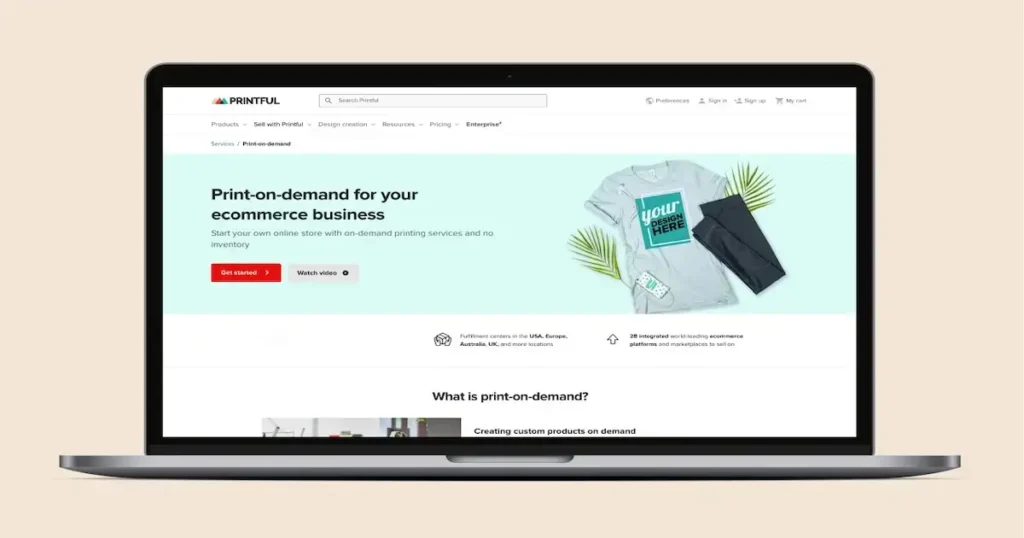
Printful caters to sellers focused on consistency and brand identity. Compared with lower-cost POD platforms, it offers tighter quality control and advanced customization options.
Features include:
- Custom labels
- Branded packaging
- Warehousing services
- Global fulfillment centers
These features enable stores to transition from hobby-level selling to structured brand development. If you need to create the actual logo and brand assets for your store, our Kittl AI review covers one of the best browser-based design tools for building professional brand visuals, with built-in presets for Printful and Printify.
Example Scenario
A successful niche fitness apparel store may migrate to Printful to deliver consistent sizing, labeling, and presentation as sales volume increases.
Strengths
- Reliable quality
- Advanced branding
- Warehousing support
Limitations
- Higher product costs
7. CustomCat — Wholesale Pricing on a Deep POD Catalog
CustomCat is a US-based print-on-demand dropshipping platform built around a straightforward model: you upload a design, connect your store, and CustomCat prints, packs, and ships under your brand with no minimum order size. Unlike some POD platforms, it doesn’t add a markup on top of the base product — you pay production cost plus shipping only when a sale happens, which keeps margins more predictable.
The catalog runs over 350 products across DTG, sublimation, and embroidery, and fulfillment out of its Detroit facility typically runs 2–6 business days. A paid Pro tier unlocks 20–40% off the entire catalog, which matters once volume picks up.
Real-World Example: A seller already running Printify for testing might move their best-selling design over to CustomCat’s Pro plan once volume justifies the $30/month fee, since the wholesale discount pays for itself quickly at scale.
Best for
- Sellers wanting deep product variety in one POD platform
- Higher-volume sellers who can offset the Pro plan cost with wholesale discounts
- Stores prioritizing US-based fulfillment speed
Strengths
- Large catalog (350+ products) across apparel, drinkware, wall art, and more
- No per-sale markup — you pay production cost and shipping only
- Pro plan discounts (20–40% off) once you’re past the testing phase
- Mockup generator and store sync built in
Limitations
- Full discount pricing requires the $30/month Pro subscription
- Free plan pricing is less competitive at low volume than some rivals
Free plan available — Pro plan unlocks wholesale pricing
8. Sell The Trend — Research-Focused Entry
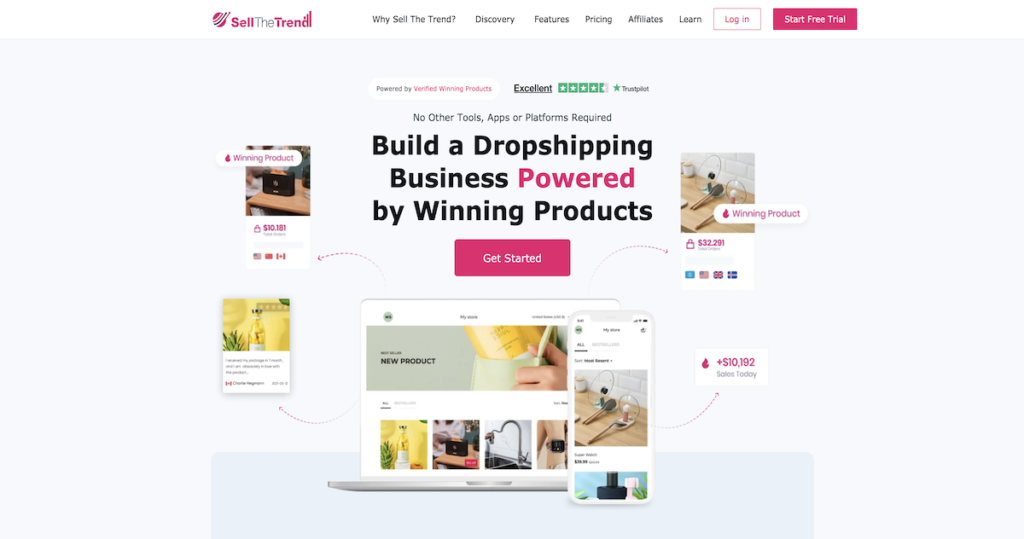
Product selection remains a major obstacle for beginners. Sell The Trend helps address this by analyzing market signals, competitor listings, and emerging trends through AI-driven tools.
Instead of guessing, merchants gain data-backed insights into potential demand and saturation levels.
Features include:
- Product trend tracking
- Competitor store analysis
- Automated product imports
Practical Use
Research platforms reduce wasted advertising spend on overcrowded product categories.
Limitations
- Subscription cost
- Learning curve
9. Eprolo — Accessible Entry Point
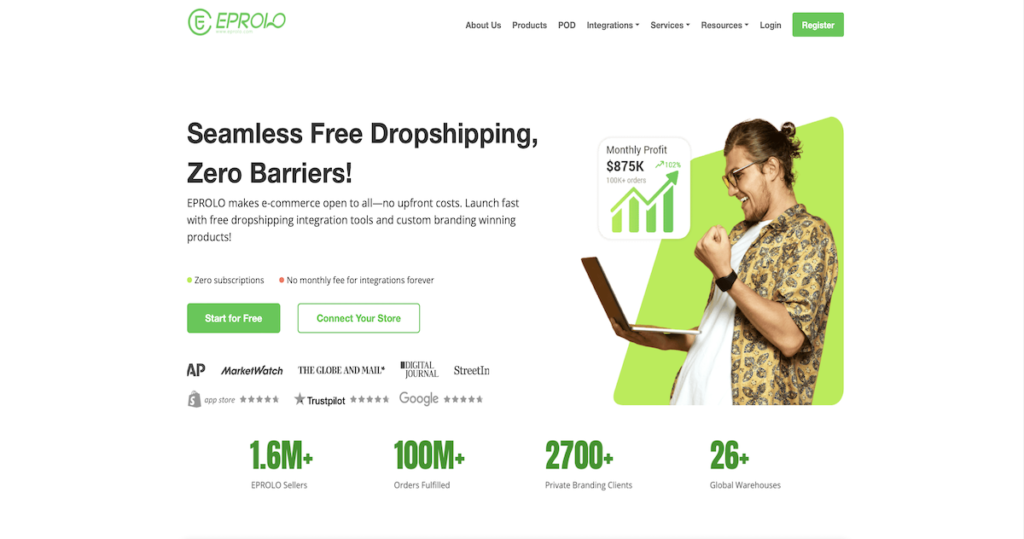
Eprolo’s appeal lies in its accessibility. It offers sourcing, fulfillment, and branding tools without requiring monthly fees, making it one of the most approachable best dropshipping tools for experimentation.
Beyond that, automation features reduce manual order processing, and private labeling options allow gradual brand building over time.
Ideal Scenario
New entrepreneurs learning platform basics without financial pressure.
Limitations
- Limited advanced analytics
- Smaller ecosystem
10. Zendrop — Scaling-Focused
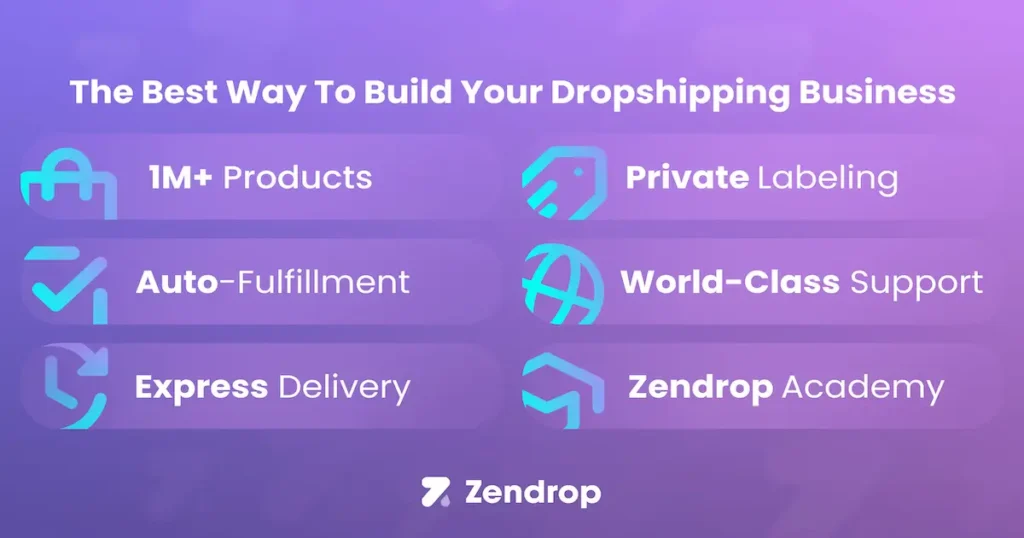
Zendrop targets growing stores that require efficiency and consistency. Automation tools streamline fulfillment, and private labeling options support branding.
Fast shipping options from domestic warehouses further enhance customer experience.
Example
A store achieving steady daily sales benefits from automation to prevent operational overload.
Limitations
- Premium tiers required for advanced capabilities
11. CJdropshipping — Broad Supply Flexibility
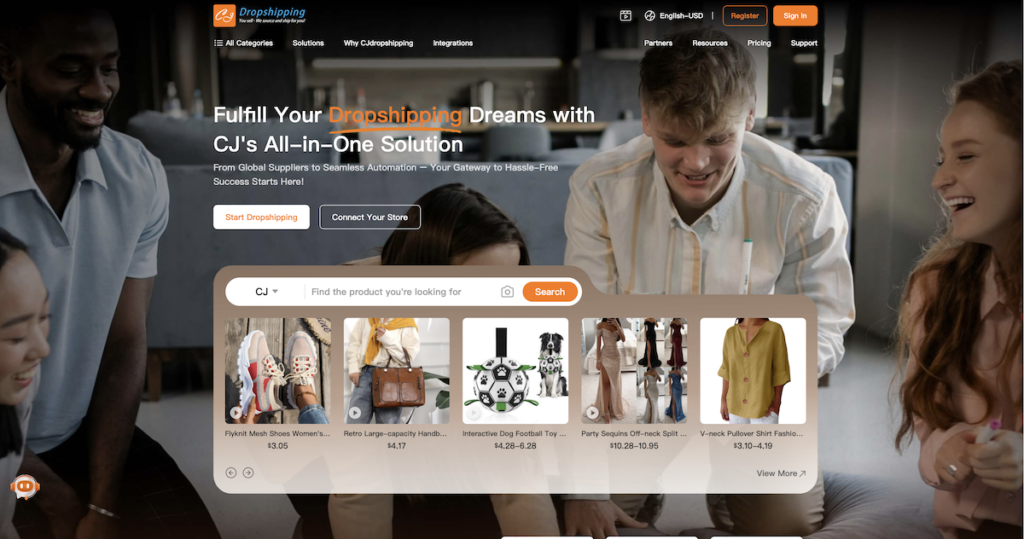
CJdropshipping offers extensive sourcing variety alongside value-added services like:
- Product photography
- Custom packaging
- Video creation
This combination appeals to merchants managing diverse catalogs.
Consideration
The platform’s depth may require onboarding time for new users.
12. AliExpress — Testing Foundation
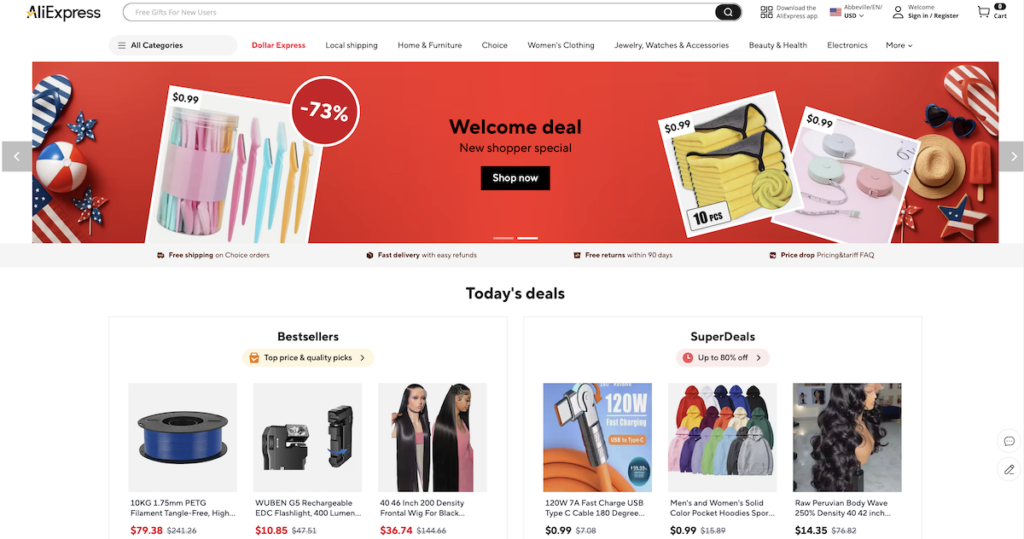
AliExpress continues to serve as an entry point for low-cost validation. While shipping speed limitations exist, its vast product range supports rapid experimentation.
Experienced sellers often transition away from it once products validate successfully.
13. Easyship — Shipping Automation
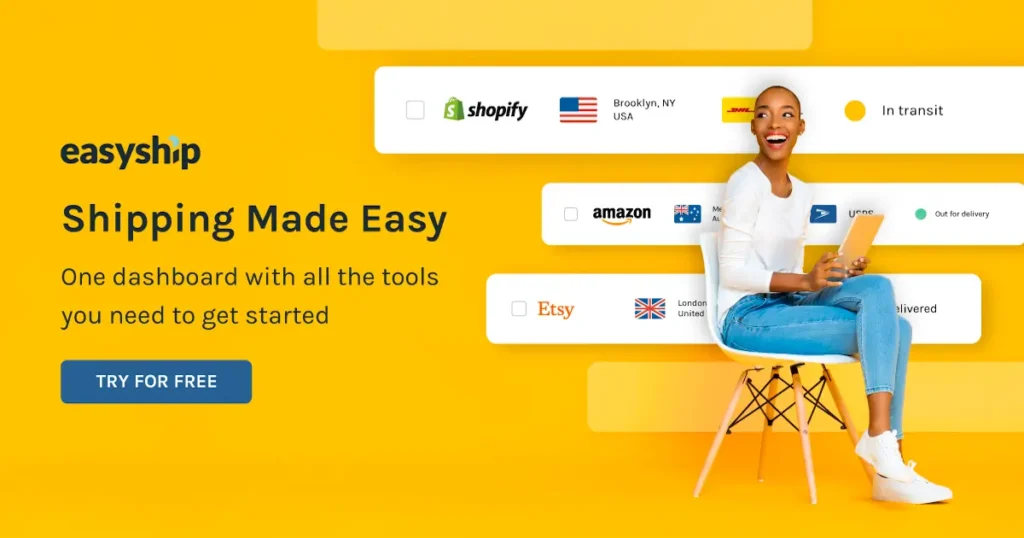
Honest caveat up front: if you’re running classic dropshipping where the supplier ships directly to your customer, you likely don’t need this — the supplier already handles the carrier relationship. Easyship earns its place for a specific case: sellers doing self-fulfillment, private labeling, or holding some inventory alongside dropshipped products.
For that hybrid model, Easyship compares rates across 250+ couriers, automates customs and duty paperwork for international orders, and shows live shipping rates at checkout.
Real-World Example: A seller who dropships most products but self-fulfills a branded merchandise line can use Easyship to compare carrier rates for just that line, rather than overpaying a single default carrier.
Best for
- Hybrid sellers (some self-fulfillment, not pure dropshipping)
- Anyone shipping internationally and needing duty/tax automation
Strengths
- Rate comparison across 250+ couriers, discounts up to 91% off retail
- Automated customs documentation for cross-border orders
- Integrates with Shopify, WooCommerce, and most major platforms
Limitations
- Not relevant if suppliers already ship directly to customers
- Higher-volume plans needed for real savings at scale
Not ideal for: Pure dropshippers whose suppliers handle all shipping
Free plan available for up to 50 shipments/month
Comparison Table of the Best Dropshipping Tools
| Platform | Best For | Free Plan | Shipping Focus | Special Features |
|---|---|---|---|---|
| Spocket | US/EU sellers | Yes | Fast regional | Branding invoices |
| Doba | US-heavy sourcing | Trial ($0.99) | Fast US | AI product research |
| Printify | Custom POD | Yes | Global | Provider choice |
| Printful | Premium POD | Yes | Global | Branding control |
| CustomCat | Deep POD catalog | Yes | Fast US | No markup pricing |
| Sell The Trend | Research | Trial | Global | AI insights |
| Eprolo | Beginners | Yes | Global | Free entry |
| Zendrop | Scaling | Yes | US/Global | Automation |
| CJdropshipping | Variety | Yes | Global | Content services |
| AliExpress | Testing | Yes | Global | Massive catalog |
| Easyship | Hybrid/self-fulfillment shipping | Yes | Global | Rate comparison |
For finding trending products fast, Genspark AI is a powerful free research tool that pulls data from across the web into one organized summary.
Beginner Mistakes When Using the Best Dropshipping Tools
- Choosing solely by price
- Ignoring shipping regions
- Scaling before validation
- Relying on one supplier
Avoiding these mistakes improves long-term outcomes.
Strategy: Combining the Best Dropshipping Tools for Better Results
Experienced sellers often layer platforms:
1️⃣ Test ideas
2️⃣ Validate demand
3️⃣ Upgrade fulfillment
4️⃣ Add branding tools
For video ads, Creatify AI lets you turn any product URL into a ready-to-publish ad in minutes, and our guide on how to make TikTok AI UGC ads walks through the full workflow. If you want to compare options, our Creatify vs TagShop comparison breaks down which fits your workflow, or jump straight into the TagShop AI tutorial to create your first UGC ad.
If you also want a tool that handles both your video ads and your full social media content calendar in one place, our Predis AI review covers one of the strongest options for dropshippers managing multiple products at once.
Frequently Asked Questions For Best Dropshipping Tools
Is dropshipping still profitable in 2026?
Yes. Profitability depends on niche choice, marketing execution, and customer experience rather than platform alone.
Which tools are best for beginners?
Eprolo and AliExpress offer low-risk entry. Spocket or Doba provide faster shipping options early on.
Can multiple tools be used simultaneously?
Yes. Many successful stores diversify suppliers.
What niche works best?
A niche balancing demand, interest, and manageable competition tends to perform best.
How long does success take?
Results vary widely. Consistent testing and data-driven decisions matter more than speed.
Is Shopify required?
No single platform is required, but most tools on this list — including several covered above — integrate directly with Shopify, which is why it’s listed first.
Which platform supports branding most?
Printful and Zendrop offer strong branding capabilities.
Do I need shipping software for dropshipping?
Not usually — most suppliers ship directly to your customer. Shipping tools like Easyship matter mainly if you’re self-fulfilling part of your catalog or holding inventory alongside dropshipped products.
Final Thoughts
Dropshipping remains a viable entry point into remote entrepreneurship when approached strategically. Selecting the best dropshipping tools does not guarantee results, but it significantly improves your starting position.
Focus on testing, learning, and gradual scaling rather than shortcuts.
If you are ready to begin: 👉 How to Start an Online Store in 2026 & Make Your First Sale
If you found this guide helpful, consider sharing or bookmarking it. This helps others building their own remote future too.
Work Smarter. Live Better.
Affiliate Disclosure: This article contains affiliate links. So, if you purchase through my link, I may earn a small commission at no extra cost to you.
Related Posts:
- Creatify AI Review – How to Create High Converting Ads Fast
- Makereels AI Review 2025: The Ultimate Guide to Viral Reels
- Predis AI Review: Your New Social Media Strategy Friend
- Invideo AI: Text-to-Video Made Simple
- Tagshop AI Tutorial: How To Make Cool UGC Ads
- What Are The Best Dropshipping Products in 2026 (Proven)
- Kittl AI Review: Easily Create Beautiful Brand Designs

Ibra A. is the founder of Remote Future, a site covering AI tools, remote work, and online business strategies. He holds a Facebook Social Media Marketing certificate from Coursera and actively tests AI tools to support independent creators and small business owners. His focus is practical, no-hype guidance for people building lean online businesses.
Content on Remote Future is created using AI tools to support efficient research and writing for remote workers and creators, followed by human edits for clarity and accuracy.
Read our AI Editorial Policy.